
How Brain‑Based PTSD Tools Improve Treatment Outcomes (and Reimbursement)
A Clinician’s Guide to Objective Indexes for Scalable Progress Tracking and Trauma‑Informed Care
By Curtis Cripe, PhD | 2025
Imagine being able to show—not just suggest—that a client’s trauma is improving. Imagine tracking neural change the same way you might monitor blood pressure or insulin levels. Now imagine what that would mean for your trauma treatment planning, your client’s confidence, and your ability to secure reimbursement for PTSD therapy, CPT, or EMDR.
In this blog, we’ll explore how brain-based PTSD assessment tools are transforming trauma-informed care—not just for clients, but for the clinicians and directors working to guide their recovery through evidence-based interventions like TF-CBT and complex PTSD protocols.
1 | The Problem with Traditional Outcome Measures
Symptom checklists and qualitative notes remain the primary way most clinics measure PTSD treatment outcomes. But for trauma therapy, where symptoms fluctuate based on triggers, trust, or daily stress, these methods offer an incomplete and often inconsistent picture.
Moreover, insurance carriers and case reviewers increasingly want more than clinical impressions—they want quantifiable data.
Without objective evidence:
- Progress is harder to define in complex PTSD cases
- Treatment plans are harder to justify without objective PTSD scores
- Denials are more likely without brain-based assessment documentation
That’s where brain-based PTSD indexes and trauma-informed screening tools make the difference.
2 | What Brain‑Based Tools Offer
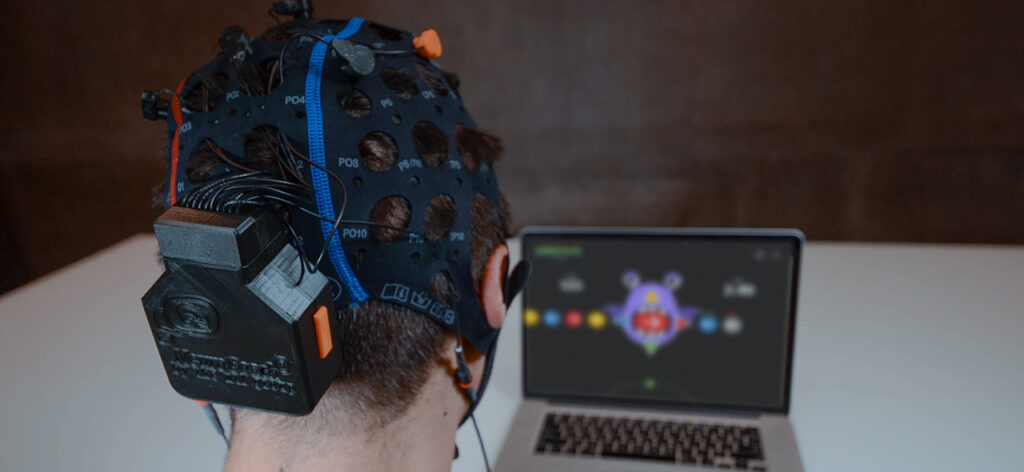
NTLGroup’s neurodiagnostic screening platform leverages EEG and functional brain mapping to provide reproducible, measurable insights into how trauma has disrupted core networks that influence PTSD expression:
- Default Mode Network (DMN) – Self-concept, autobiographical memory, and rumination
- Salience Network (SN) – Emotional threat detection, vigilance, interoception
- Central Executive Network (CEN) – Attention regulation, impulse control, working memory
From this data, therapists receive a PTSD Index Score and neural function profile that:
- Identifies severity and subtype (classic PTSD, dissociative, subthreshold)
- Tracks neural recovery over time using objective PTSD scores
- Supports EMDR, CPT, TF-CBT, or neuroadaptive therapy recommendations
- Validates medical necessity to insurers through functional disruption metrics
3 | Reimbursement‑Ready Outcomes
One of the most powerful benefits of using brain-based PTSD tools is the ability to speak the language of insurance adjusters, peer reviewers, and utilization managers.
- Objective PTSD scores = clearer justification for ongoing trauma therapy
- Pre/post comparisons = outcome data for CPT and TF-CBT protocols
- Functional impairment indexes = tie neural data to real-life disability and disruption
These data can be integrated into EMRs, appeals, and clinical reporting. Clinicians don’t just hope to be covered—they submit evidence-based trauma-informed care supported by neuroscience.
4 | Case Snapshot: Miguel – Construction Foreman with Flashbacks
Miguel suffered a traumatic workplace accident. He avoided elevators, was startled by loud noises, and had been denied coverage after two CBT sessions.
His EEG-based PTSD assessment revealed:
- PTSD Index: 63
- Disruption in SN and CEN
- Emotional overactivation + impaired regulation
Plan: 10 weeks of neuroadaptive training combined with CPT.
Result: Index dropped to 34. Nightmares ceased. Miguel resumed supervisory work. His insurer, initially skeptical, approved continued PTSD treatment based on quantifiable neural improvement and trauma-related functional recovery.
5 | A Tool for Therapists, Directors, and Institutions
Whether you’re a solo provider, clinical director, or part of a trauma recovery program, these trauma-informed diagnostic tools are designed to work with you—not replace your clinical judgment.
- Therapists use PTSD Index scores to adjust treatment plans in real time
- Clinical directors use metrics to demonstrate outcomes for grants or contracts
- Institutions use objective PTSD reports to justify reimbursement and strengthen accreditation
This isn’t about removing the human side of therapy. It’s about equipping your clinical decision-making with the best trauma screening tools and measurable metrics available today.
6 | Getting Started with Brain‑Based Outcomes
Here’s how trauma-informed clinics integrate brain-based PTSD tools:
- Baseline – 12-minute EEG assessment
- Report – PTSD Index + subsystem breakdown (SRS, iSEC, FSH)
- Match – Adjust intensity or modality (e.g., EMDR, CPT, TF‑CBT)
- Reassess – Track change every 4–6 weeks
- Report – Document outcomes for EMR, insurance, and client review
The system integrates seamlessly with IQity’s cognitive readiness programs, creating between-session growth for adolescents, first responders, and veterans receiving trauma therapy.
7 | Get Started
• 📥 Download the white paper: Transforming PTSD Identification
• 🎥 Book a 15-minute demo: See how NTLGroup’s system supports brain-based trauma therapy
You don’t have to choose between quality care and data-driven practice. With objective PTSD tools, you can deliver both—and ensure your clinic’s services are defensible, reimbursable, and results-oriented.
NTLgroup’s tools are designed for your clinic, trauma program, or behavioral health facility. Let’s bring precision into PTSD care.